About the podcast
In this second podcast on chest trauma, consultant anaesthetist and chest injury lead Dr Ross Vanstone guides us through the inpatient management of chest wall injuries.
The podcast covers the analgesic bundle, incentive spirometry and the tools used to monitor for deterioration in these patients.
The learning areas covered in this podcast are included in the show notes. If you haven’t already, check out our podcast on chest trauma with Mr Adrian Marshbank linked below.
Management of Chest Injury – ThePTN podcast
Learning areas covered in this podcast:
Breathing assessment:
- Is able to show knowledge of anatomy and physiology of the respiratory system
- Is able to perform a structured respiratory assessment understanding normal breathing and recognise respiratory distress
- Is able to describe the causes of respiratory distress in trauma, both at the initial assessment and throughout the patient’s stay in the emergency department
- Understands the indications for using pulse oximetry and the potential pitfalls of pulse oximetry
Clinical assessment and management of pain:
- The nurse/AHP is able to demonstrate the use of appropriate pain assessment tool, suitable for the patient’s age, developmental stage and cognitive function
- The nurse/AHP has knowledge of the NICE (2016) ‘Major trauma: assessment and initial management’ guideline with respect to pain assessment and management
- The nurse/AHP is able an describe different modalities of pain management and their use: positioning, splinting, pharmacological, regional, non-pharmacological
Links:
PTN automatic Acceptance Secondary Transfer Guideline: Pathway 2 Isolated Chest Injury
PTN Chest wall injury clinical guidance: link
ThePTN Chest Trauma podcast: link
NICE Guideline NG39; Major trauma: assessment and initial management here.
Pain, incentive spirometry, cough (PIC) chart
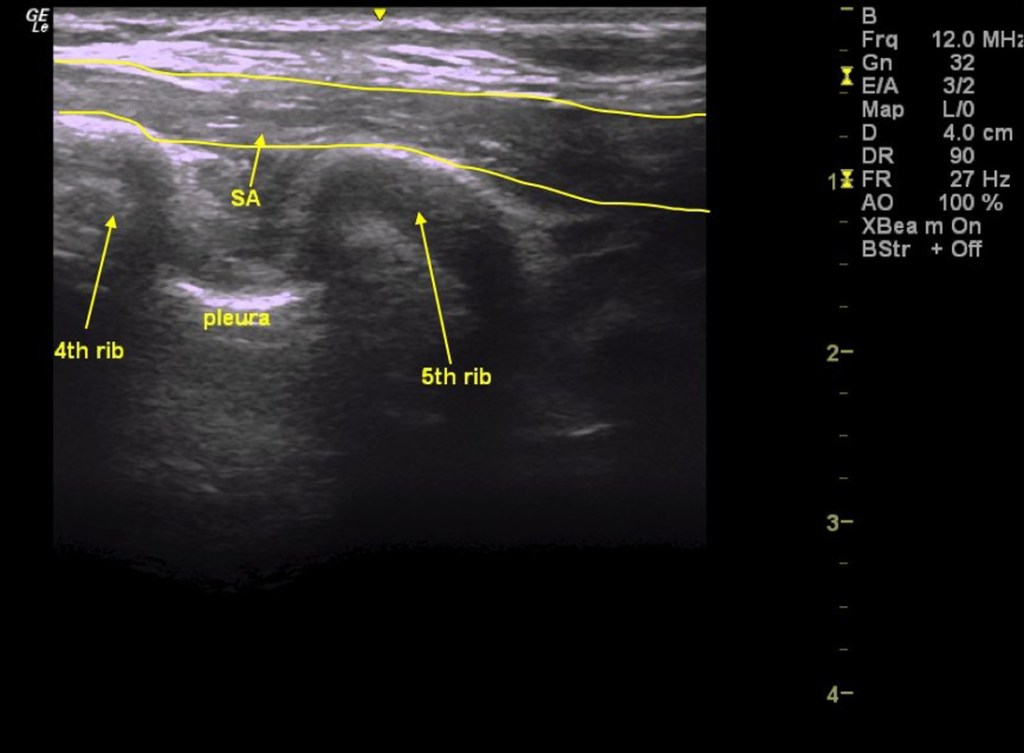
Images courtesy of Mayes, J., Davison, E., Panahi, P., Patten, D., Eljelani, F., Womack, J. and Varma, M. (2016), An anatomical evaluation of the serratus anterior plane block. Anaesthesia, 71: 1064-1069. link
Beard L, Hillermann C, Beard E, et al Multicenter longitudinal cross-sectional study comparing effectiveness of serratus anterior plane, paravertebral and thoracic epidural for the analgesia of multiple rib fracturesRegional Anesthesia & Pain Medicine 2020;45:351-356 link
Todd S et al A multidisciplinary clinical pathway decreases rib fracture-associated infectious morbidity and mortality in high-risk trauma patients link
 THE PTN